Sunday, 29 November 2015

Kayle WIP

Here is a work in progress of a study that I did of Kayle from League of Legends.

This piece below is by Enijoi


After realising that I drew the wings entirely wrong from the start due to lack of concentration and self-analysis of my own work, I had to figure out how the wings should look. I experimented with editing the perspective, brightness and the size and angle of the left wing before finally deciding it would be best to just redraw parts of it and rotate some of the wings. I am much happier with the final image (directly above), however I still feel that the whole image could have been better if I had got the wings right in the first place. 

After trying to add a suitable background, I realised that this is one of my weaknesses. The character looked very detached from the background no matter what I tried. I need to improve this and learn how to draw an entirely cohesive piece that has an overall focus on the character, yet features a simple background to make it look like a complete image. I would love to perfect this piece, however I have already spent so much time on it and am at a place where I am adequately happy. I will hopefully come back to it at a later date to improve it. 

I used Stanley "Artgerm" Lau's artwork to inform the way I painted the fair and face. I tried to use his techniques to map out shading on the face and neck, and also to make the hair flow. I also used reference photographs from Google to aid in my understanding of the way the body looks and how shading would appear on the muscles and curves of the body. I think this has improved my technique, as the final result looks a lot better than earlier works in progress of this artwork. 

Thursday, 19 November 2015

What Makes a Good Video Game Hero? (TechnoBuffalo article)

http://www.technobuffalo.com/2012/08/11/what-makes-a-great-video-game-hero/

Joey Davidson: 

"The best heroes are silent or brief with wit... Master Chief keeps his exposition exceptionally short and... you'll never see Solid Snake run on a four hour diatribe of conviction before taking on a Metal Gear."


Eric Frederiksen: 

"The most interesting [heroes]... end up making a lot of poor decisions along the line. Max Payne struggles with addiction and depression while trying to protect the people he's paid to watch." This is due to the narrative of the character, the actions they are written to carry out. Evidence of character narrative creating more interesting characters." 

"If things are too easy and straightforward, it's hard to believe what's going on. The hero simply becomes an archetype instead of a human being. If the hero is just an avatar for the player to interact with the world as in Skyrim, even saving the world can somehow be less moving than simply surviving." 


Ron Duwell:
 
"As the idea of an immersive video game experience takes off more and more, the presence of a characterless lead becomes more and more important. To totally inhabit a world, the main character of a video game must be our avatar to explore with, not dictate what we are to believe."

"Chrono Trigger, Suikoden II, and Alundra; all of these wonderful games work so well because their protagonists keep their mouths shut and let the plot take centerstage."

"Nowadays, RPG's offer so much customization to characters that giving them a personality is nearly impossible. Elder Scrolls V: Skyrim, Dragon's Dogma, Dark Souls, and Mass Effect all put the burden on gamers to fill in the gaps, an art that embodies what imagination is all about."

Wednesday, 18 November 2015

Literary research: An Examination of Violence and Gender Role Portrayals in Video Games: Implications for Gender Socialization and Aggressive Behavior

An Examination of Violence and Gender Role Portrayals in Video Games: Implications for Gender Socialization and Aggressive Behavior. By Tracy L. Dietz, 1998


"This project illustrate s that the portrayal of female characters in popular video game s is overwhelmingly stereotypical when they are presented at all. Furthermore, the females portrayed in these games, even when they occupy the role of a hero, are often depicted as subordinate to male characters or are presented in terms of their sexuality. It may be argue d that even though these female characters are depicted as primary characters, they represent negative role mode ls of women at the same time, teaching that the contributions of women are somehow subordinate to, or less important than, those of men." It gives "the idea that women are to be viewed as weak, as victims, and as sex objects."

This piece by Dietz also touches upon the portrayal of women as victims or damsels in distress, which reminded me of a video I found on YouTube:

https://youtu.be/X6p5AZp7r_Q

Monday, 9 November 2015

Costume Design by Deborah Nadoolman Landis

Jenny Beavan: "My process begins with breaking down the script on sheets of paper. Then I go through the script until I know it by heart and have lived and breathed each of the characters. The film I am designing now is contemporary with a crowd scene at the Savoy Hotel, so I hang around the Savoy and watch who goes in and out of the lobby. I am a people watcher. For Alexander (2004), I looked at vases in the British Museum; for Sherlock Holmes (2009), it was a mixture of old photographs and artists like Leslie Ward and Gustave Doré."

Leslie Ward (1851-1922) was a British portrait and caricaturist. Some of his work is below and you can see the influence that it has lent to Sherlock Holmes (1887):


As for French artist, illustrator, sculptor and printmaker, Gustave Doré (seen below), his "seamy, slimy side of London... etchings also seemed appropriate for [Sherlock Holmes]."


Beavan puts "together a notebook to remind [herself] of the different clothes that might be suitable for each character."She states "costumes should support the actor's performance. Costume design has far more to do with storytelling than to do with clothes."

Yvonne Blake: "if it's a period film, I may be inspired by paintings; for The Three Musketeers (1973) it was the paintings of Van Dyke and Rubens."


Self portrait of Van Dyke above, and of Rubens, below.


"Whether the film is contemporary or a period piece, as a designer I show the fashion of the time in which the film is set. Fashion is what people wear in any given time. The design reveals the social standing of the person I'm dressing; this is a statement of that time and in sociological terms. I think it's very important that costumes look like they're lived in, they mustn't look like they're fancy dress costumes."

Mark Bridges: "with a contemporary screenplay, I try to figure out who the characters are and what style of garments they would wear, where they would shop, how they feel about themselves. Their shoes, the way they wear their pants, will speak volumes to the audience." "If I'm designing a look that's 

Saturday, 7 November 2015

""Plot is overrated": game narrative is all about your characters"

http://www.gamasutra.com/view/news/213337/Plot_is_overrated_Game_narrative_is_all_about_your_characters.php

In an article on Gamasutra, written by Mike Rose, Tom Abernathy, the "narrative lead at Riot Games, and Richard Rouse III of Microsoft Game Studio, discuss structure for narrative in video games." They "not that in games, when we say that a game has a great story, we're usually talking about how great the characters are, rather than the plot itself." I am not sure I fully agree with this point, as I do appreciate games for the story, a good character on it's own may not grab my attention enough if the story is boring. When I think of my favourite games, Final Fantasy VII, IX,  and Metal Gear Solid, to name a few, I remember both the story as well as the characters. I suppose what made Final Fantasy VII a memorable game to me, and many others, was perhaps indeed due to the characters, especially Aeries, due to her death being very emotional. Additionally, the twist of Cloud's memories not being his own, was another memorable moment. I suppose you can't have a good story in games without the characters, as the characters further the story, thus the two are interlinked. Aeris on her own was not a particularly interesting character, neither was Cloud, however what happened to them or what was revealed about them made them interesting and memorable. This is seen in the newer Final Fantasy games, where the similar character archetypes are shown, for example Lighning being similar to Cloud, however, the characters and story are considerably lacking in comparison, which is why they are less successful in my opinion. However, when you look at other games, such as The Witcher, you see more of the character development, and you form more of a relationship with Geralt, and in some way that overshadows the plot. This shows the difference between a story-driven RPG and a exploration-driven RPG.

"People remember characters, and they care about them... Focus on character first, and align character motivations with player motivations."


Concerning character design, I came across this image highlighting the issue of copying other artists' work. The new League of Legends character, Kindred looks incredibly similar to Chiara Bautista's characters of the moon lady and the wolf. This has caused a bit of a stir for Bautista's fans, thinking that Riot stole the artistic ideas from her. However, the idea of black and white, yin and yang, wolf and lamb are not particularly original, nor new. This highlights the struggle of creating original work and avoiding copying other artists.

http://imgur.com/gallery/8hONl

Friday, 6 November 2015

Inspiration from Asian fashion

Since the majority of games that I play are from Japan (e.g KoF, Street Fighter, Dead or Alive, Metal Gear Solid, Final Fantasy etc), I thought I would look into Japanese street fashion, as it is also something that has always interested me due to how interesting some of the styles there are. 

I found these photos on http://tokyofashion.com/photos/ 

I chose these photos in particular due to certain elements in them which I liked, for example, the first photo reminded me of the League character, Yasuo: 

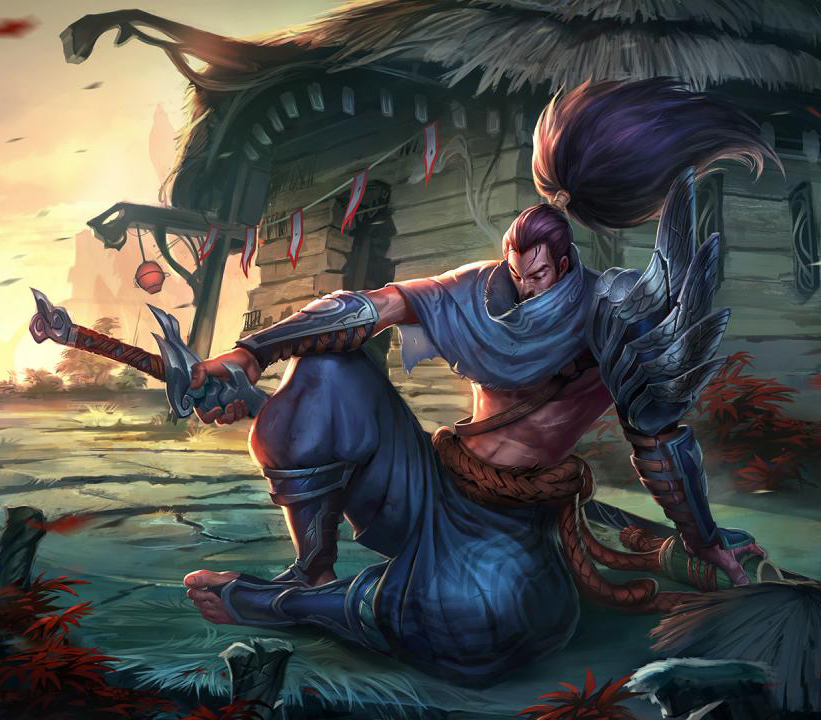
I liked the cape and hat, however the under clothes look quite casual. What reminded me of Yasuo was perhaps the blue of the cape, and how the cowl looks like Yasuo's. Additionally, the shamisen that he is playing reminded me of the flute that Yasuo plays, and the hat worn is connotative of a typical Asian, which is also the vibe given off from Yasuo as well.


I liked this photo below, as it is a very simple outfit, yet the designs and colours make it appear more extraordinary and eye catching. I also like the hair style coupled with the glasses, it makes it look effortless and casual, yet there's something extra there. I think this type of outfit would be perfect for a costume design for a fighting game. It is also something typical that a girl could wear, if it was her style. 


I liked this one because I liked the colours of the girl, the hair coupled with the dress, it's cute yet edgy, again something that could plausibly be in a fighting game. I also liked the hairstyle, it's girly and cute, but the girl looks a little tough.


I liked the floral eye patch in the following photos, I thought it was very cute and original, and interesting. I also love the dress in the second image,


 The floral eye patch reminded me of Zero from Drakengard


 I liked this one due to the cape and the boots, combined with the mask, I found it somewhat elusive. It also reminded me of Bucky from Captain America (directly below), due to the mask over the mouth and nose, and also Erron Black from Mortal Kombat, I guess due to the cape.


Below is Minori, who specialises in Shironuri makeup, which means "white painted face". Her art, and her makeup explores natural themes. Some of her makeup incorporates flower petals, and she had a series featuring the four seasons as a makeup look. On top of her amazingly artistic makeup, her fashion sense, and costumes, are very extravagant and over the top, so they match her makeup as well. I find her to be a very interesting person to take inspiration from. 


Below are two links about Minori and shironuri makeup.

http://www.ibtimes.co.uk/meet-minori-shironuri-fashionista-making-waves-streets-tokyo-1450199

http://gloomthzine.com/2013/04/17/shironuri-makeup-tutorial/


Monday, 26 October 2015

Interesting article titled: Repelling the Invasion of the "Other": Post-Apocalyptic Alien Shooter Videogames Addressing Contemporary Cultural Attitudes

I came across an article titledRepelling the Invasion of the "Other": Post-Apocalyptic Alien Shooter Video games Addressing Contemporary Cultural Attitudes. I found this when I was searching up "themes occurring in shooter games", to find out what style my characters would fit in, e.g post-apocalyptic, sci-fi etc. 

The article talks about how alien invasions in video games is becoming a common occurrence. It states that "scholarly works have dealt with videogames addressing issues like post-9/11 culture, but little attention has been paid to the alien invasion games that, while trading in the same fear of destruction, have transcended these political and cultural concerns. Instead, they address deeper held Western ideas, such as a Eurocentric view of the world, which features a sharp distinction between Insiders and Outsider "Others," and the related theme of US reputation overseas."


The extract below, talks about how the aliens in GoW actually symbolise foreigners, due to their humanoid features, and how it could be a metaphor for a racial/cultural divide.


In the Gears of War series, for example, human beings have been attacked by creatures that have risen up out of the ground and destroyed most inhabited areas. These creatures walk on two legs, have the basic facial structure of human beings (eyes, mouth, nose), and speak in a form of garbled "English." These physical traits signify that they share a foundational genetic similarity with the humans themselves, and this opens up the possibility of reading them as signifying a different race than the protagonists. The skin color of the creatures, called Locust by the humans, as well as their uneven skin texture mark them as different and "Other." The protagonist characters in the Gears of War series would not all be considered White, with the main group including a man coded as Black and another coded as Latino, but with their English and their mannerisms they all signify American. The Locusts' speech, which can be understood to contain words like "Die Ground-Walker" as if it was spoken with a severe rasp, connotes that the language spoken by them is related to English but foreign at the same time. All of this points to the aliens being coded as human-like enough to understand, but as being racial and culturally different enough to repel. It is in their similarities that the connection can be made that these creatures do not simply denote a completely alien race attacking the humans, but instead they connote a race of humans that is strange and foreign to the protagonists. It should be noted that anthropomorphized alien creatures are not only common within the science fiction genre, but also make sense in shooter games for movement and aiming purposes. However, the addition of "garbled" English and features so closely resembling humans pushes this feature towards "Othering."


These same signifying dynamics are present in other videogames of the same subject matter. The Resistanceseries also depicts humanity under siege from an alien force that is threatening to take over all areas of the world. The creatures in this game, known as the Chimera, also walk on two legs and have the basic movements and characteristics of human beings. The connection between alien and human in this series is even more direct because the Chimera are "created" by incubating human beings in pods to "convert" them. They emerge from these pods with eight eyes and different colored skin, signifying their connection with humanity along side their "Otherness." In Resistance 2 (Insomniac Games, 2008), the protagonist Nathan Hale gets up close and personal with these pods as he encounters an infested small town where they hang from the very walls of idyllic small town homes. Not only does the presence of the pods containing half-formed Chimera in the homes of the humans signify the connection between the two species, but also when Hale breaks open the pods there is an unmistakable splash of blood that sprays. Blood is an important theme throughout these games because, as Michel Foucault states, blood signifies and is "a reality with a symbolic function" (1979, p.147). In this case, the red blood that breaks loose from the pod, along with the half-formed Chimera that falls out, signify the connection these creatures have to human beings. Some games are even more blatant about the connection between humans and the invading "alien" forces. The Killzone series depicts a post-apocalyptic world where a group of humans were forced to leave and live on the planet Helghast. These former humans, now known as Helghans, attack the remaining humans. The Helghans must wear respirator masks due to the Helghast atmosphere, but they are direct descendants of the human race.
All of these examples of narrative elements speaks to the connection of the alien forces to humanity and yet "Others" them so as to make them easily killable. This distinction between "Other" and normal, as a feature of media texts, is a process reminiscent of the seminal social psychological work of Henri Tafjel that discussed ingroup and outgroup dynamics. Tafjel states:
in order for the members of an ingroup to be able to hate or dislike an outgroup, or to discriminate against it, they must first have acquired a sense of belonging to a group which is clearly distinct from the one they hate, dislike or discriminate against (1974, p. 66)
In these alien invasion videogames, the ingroup is established as the normal Western human beings and the outgroup established as the "Other" aliens, which stand in for the broader cultural "Other." This coding and the added element of symbolic violence serve to attack cultural "Others" without complicating gamers' identification with game protagonists. Blurring the lines between human and alien helps to reify cultural fears of those that are different through serial violence done to the alien "Others."

This to me is an interesting theory, however, I do not agree with it. Having played Resistance, it seems to me that the Chimera are simply an alien race. Following sci-fi films and the idea of aliens coming to take over the earth and wipe out humanity. It makes sense. It does not seem to have a deeper meaning. However, it is definitely interesting and something to keep in mind when designing characters that appear somewhat alien, yet human. The human features enable the player to more easily empathise with the character, however, this would also have something to do with the story when developing a character that is meant to have much more symbolic meaning than just alien. 

Thursday, 22 October 2015

Progression

Now that I have a clearer idea of the questions and areas that I am interested in concerning character design, I decided a good way of progressing the project would be to find out how to actually design a character. I came across a video by CUBEBRUSH on youtube, https://www.youtube.com/watch?v=3EY8UNy4RQQ, which details the steps to take when designing a character.

In the video Arnold Tsang (artist at Blizzard) is credited for the list. Here is an article featuring Tsang on character design concept art: http://www.polygon.com/2014/3/24/5541390/blizzard-character-design-concept-art

At the start of the video there are three main categories: genre, theme and class. These are the fundamentals to think about when creating a character. However, as I am not working to a brief set by someone, I will have to come up with my own. I feel a good place to start is by picking a few genres, such as FPS, RPG/ MOBA and fighting games, and designing characters for those genres. Depending on time, I can either pick a few themes, such as horror, fantasy or sci-fi, and do a few sketches or refined paintings for each game genre. This will enable me to build up a varied portfolio, whilst also improving my creativity and flexibility as an artist.

The genres I will design characters for will be fighting games, Shooters and RPG/ MOBAs. I picked these three genres and FPS and RPG/MOBAs are currently quite popular, and fighting games will enable me to make a lot of different characters and I can have more freedom to experiment with design and clothing. So now that I have picked I will have to do the relevant research on each genre to find out what types/class of character are featured in each. This will be my initial point of research. Next I will make a list of different themes that are commonly featured in these games, and will finally have a selection to choose from to form the basics of my character. For example, FPS, sci-fi, horror, tank, and this will help me greatly as a starting point.

Monday, 19 October 2015

Costume sketches

Taking inspiration from the characters previously mentioned in this blog and trying to come up with different and interesting costumes.


+

With these designs, I liked the belt as it added more femininity/ a girly element. However, I do not feel that I will take any of these designs further as they lack originality, so they are merely for practice purposes. 

Below are some random sketches of clothing from different clothing websites and TV series'. The top page is influenced by Japanese fashion and also a lolita-esque style.


This bottom page is influenced by Once Upon A Time, so fantasy, typical RPG clothing.


New custom brush

I created this brush using this tutorial: https://www.youtube.com/watch?v=ZkV3TfhCHPU as I really like the effect and the tutorials on the channel. I also enabled pen pressure which works nicely to create different values, as can be seen below. I had to disable it for a while due to Photoshop bugs.


Sunday, 18 October 2015

Questions on character design in games

Is the artistic design of the character enough to suggest the character's personality/ disposition?

How big of a role does the artwork play in comparison to the character's personality?

How does the look of the character affect the players initial perception of them compared to the actions of the character?

Is character customisation really important?

Can character customisation greatly affect the relationship between character and player, even if the character's narrative (characterisation) does not change despite the customisation?

Is there enough variation in character design to satisfy players?

Is the art style of a game always indicative of the intended audience?

Is identifying with the character always important? For example, MOBAs have many characters that you can play, it's not like an RPG where you may form an emotional attachment to your character. Or even DOOM where the character has no name, as the protagonist is supposed to be the player. (http://doom.wikia.com/wiki/Doom's_protagonists)

Not all video game characters have a back story or even anything to say, there are just there visually. How impactful is their design; is it enough to make them significant in some way.

How the different elements of character design come together to form a complete character. For example, voice actor, animation, expressions, clothing etc.

How big a part do culture and society play in character design?


Umbrella:
Explore the different elements that go into character design.

Tuesday, 13 October 2015

Follow on from Regina

I was searching for a character the other day who I remembered being female but dressing to pretend to be male. It turned out that this character was King from King of Fighters. In my search for King, I found a character, Elisabeth, whose costume design reminded me a little of Regina's from Once Upon a Time, in terms of the tailcoat and mixing that tailored feminine look with a little bit of masculinity.

 Below is King. I suppose the reason this character is so believable or works so well, is because she is somewhat reminiscent of those pretty boy Japanese characters, the effeminate males that are often seen in Asia and in games. Other examples of feminine looking characters can be seen in the Final Fantasy series, where they used Gackt as inspiration for the character of Genesis.

Even her clothing, is not particularly masculine, as it can sometimes appeared to be tailored, therefore making it look more feminine. However, her shoes, bow tie, and gloves do strike the viewer as masculine items. King was the first character I came across in games who is female dressed or rather disguised as a man. On further researching I found that a few of the Guilty Gear characters appear very effeminate, for example, Bridget who appears to be a girl entirely (as can be seen below).